

A dementia diagnosis changes everything — for the person receiving it, and for the people who love them. If your parent, partner, or family member has been diagnosed with dementia, you’re probably navigating a mix of emotions: grief, fear, love, exhaustion, and the very practical question of what happens next.
Many people with dementia live at home for years — often with the right support in place. This guide is for families who are trying to understand what that support looks like.
The early stages: what changes at home
In the early stages of dementia, your loved one may still be largely independent. But you might start to notice small things — missed medication, forgotten meals, confusion about the day or time, difficulty managing bills or correspondence.
This is often when families start to worry, but feel unsure whether the situation is serious enough to warrant outside help. The answer is almost always yes — not because the person can’t cope, but because early, consistent support makes an enormous difference to how well someone maintains their independence and quality of life over time.
Routine is everything
For someone with dementia, routine provides a sense of security and familiarity that reduces anxiety and confusion. Regular visits at predictable times, familiar faces, consistent ways of doing things — all of this helps.
This is one of the reasons good dementia home care is built around continuity. At 24hr Response Care, we aim to ensure that clients with dementia see the same small team of familiar carers, rather than a constantly rotating roster of strangers.
Practical support that makes a real difference
- Medication prompts and administration — one of the most critical areas, as missed or doubled medication can be dangerous
- Meal preparation — ensuring they’re eating properly, particularly if they’re forgetting to eat or losing interest in food
- Personal care assistance — approached with patience, familiarity, and respect for dignity
- Orientation support — gentle reminders about the day, the time, upcoming events
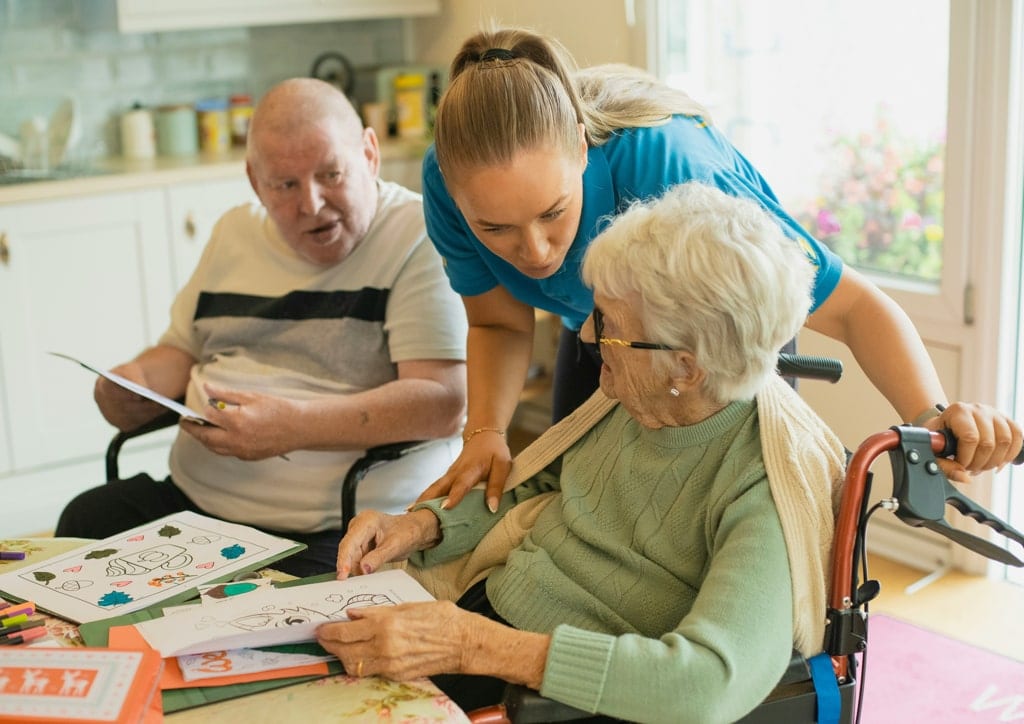
- Companionship and engagement — conversation, reminiscence, activities that provide stimulation and connection
- Safety checks — ensuring the home environment is safe, the cooker is off, doors are secure
Supporting the carer too
If you’re the main family carer for someone with dementia, your own wellbeing matters just as much. Carer burnout is real and common. Respite care — whether a regular few hours each week or a longer break — isn’t a luxury. It’s what allows you to keep going.
When should you consider more intensive support?
Signs that the current level of support may need to increase include increased confusion (particularly in the evenings), wandering or getting lost, difficulty recognising family members, significant weight loss, falls becoming more frequent, or family carers reaching the point of exhaustion.
These are conversations we can help you have. We’ll always be honest with you about what we think the right level of support is.
We’re here to help
Whether you’re just beginning to think about support or you’re at a crisis point and need help urgently, call us on 07939 719 223 or 07825 162 802. We cover Glasgow, Paisley, East Kilbride, Milngavie, Barrhead, and across west central Scotland.

0 Comments